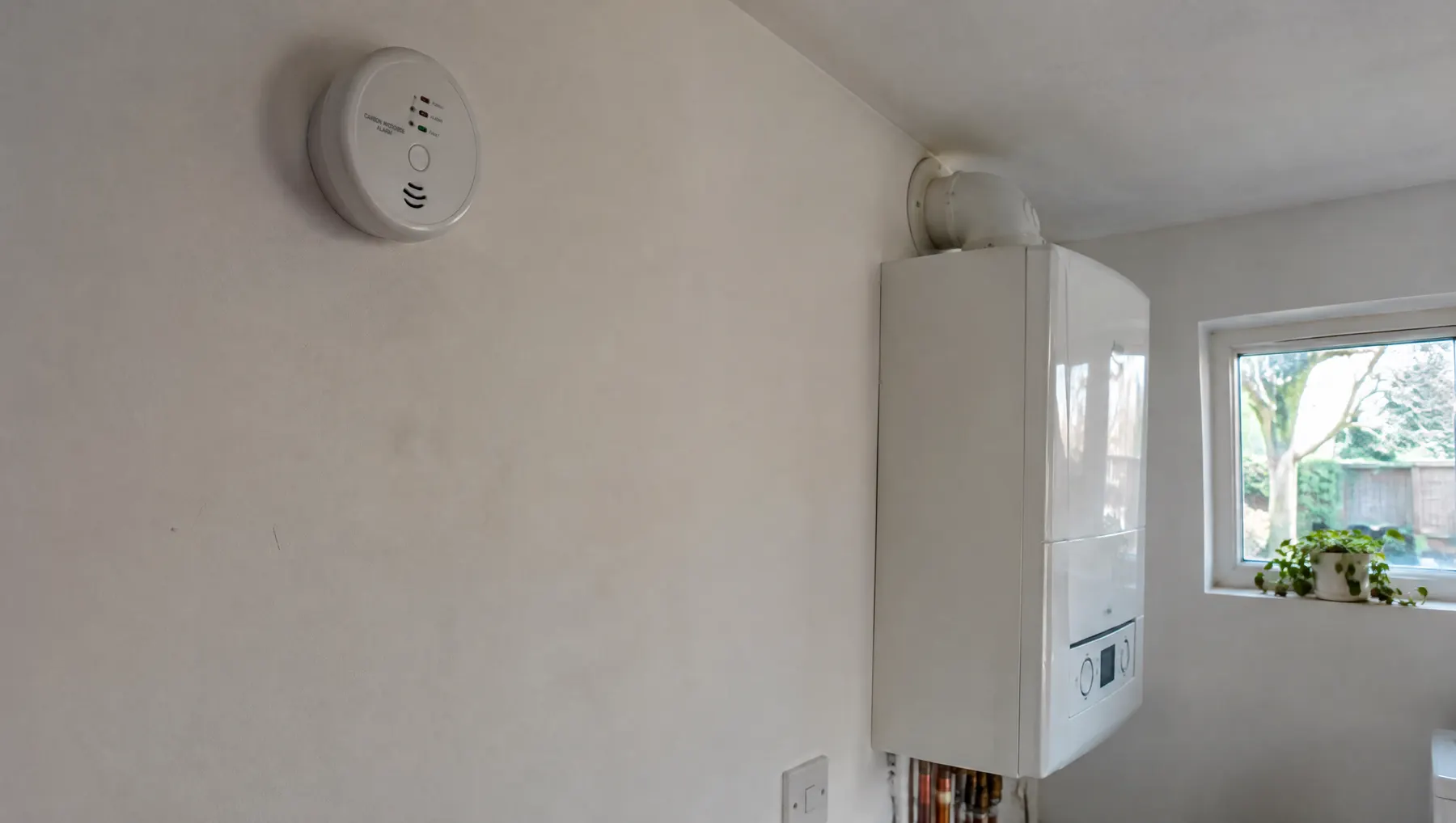
Carbon monoxide alarm fitting
The right alarm, in the right spot, near the right appliances.
Carbon monoxide has no colour, smell or taste, and a faulty boiler, fire or flue can produce it. A working CO alarm is your warning. We fit alarms in the right position for each appliance, check your gas appliances while we are there, and help landlords meet the smoke and carbon monoxide alarm rules for rented homes in England.
Rules for landlords in England
Since 1 October 2022, the Smoke and Carbon Monoxide Alarm (Amendment) Regulations apply to both private and social landlords in England. The main points from the government guidance:
- A carbon monoxide alarm in any room used as living accommodation that has a fixed combustion appliance, such as a gas or oil boiler or a log burner (gas cookers are excluded)
- A smoke alarm on every storey that has a room used wholly or partly as living accommodation
- Alarms checked and working on the day a new tenancy starts
- Faulty alarms repaired or replaced once the landlord is told about them
- Councils can issue a remedial notice, and failing to comply can mean a fine of up to £5,000
New boilers and fires need an alarm too
Building Regulations in England (Approved Document J, updated in October 2022) say a carbon monoxide alarm should be fitted when a new or replacement fixed combustion appliance goes into a home. That covers gas and oil boilers and solid fuel stoves, but not gas cookers.
So when we fit a new boiler, a CO alarm goes in with it. It is not an optional extra.
Where the alarm should go
Position matters more than people think. An alarm stuck in a cupboard or behind a curtain may not pick up CO in time. The guidance in Approved Document J is to fit it in the same room as the appliance, between 1 and 3 metres from it horizontally, either on the ceiling at least 300mm from any wall or high on a wall but not within 150mm of the ceiling.
Alarms should meet BS EN 50291. Sealed long-life battery models are the simplest because nobody needs to remember to change batteries.
Know the signs of carbon monoxide
HSE lists headaches or dizziness, breathlessness, nausea, tiredness, chest or stomach pains and loss of consciousness among the symptoms. Warning signs on appliances include yellow or orange flames instead of blue, soot or staining, and pilot lights that keep blowing out.
If your alarm sounds or you suspect CO, turn off the appliance, open doors and windows, get everyone out into fresh air and call the National Gas Emergency Service on 0800 111 999. Seek medical help if anyone feels unwell.
What is included
- Advice on which rooms need an alarm
- BS EN 50291 alarms fitted in the correct position
- Smoke alarm advice for landlords on each storey
- Quick visual check of the gas appliances in each room
- Can be combined with a landlord gas safety check
Carbon monoxide alarm fitting FAQs
Do landlords have to fit carbon monoxide alarms?
In England, yes. Since 1 October 2022, landlords must fit a CO alarm in any room used as living accommodation that contains a fixed combustion appliance, excluding gas cookers. That includes gas boilers. We can fit them during your landlord gas safety check.
Does a gas cooker need a carbon monoxide alarm?
The landlord regulations and the Building Regulations guidance both exclude gas cookers. Plenty of people fit an alarm in the kitchen anyway, especially if a boiler is in there too.
How long do CO alarms last?
It depends on the model. Most have an end-of-life warning and a replace-by date printed on the back. Test it monthly with the button.
Is a CO alarm a replacement for a gas safety check?
No. An alarm warns you when CO is already in the room. A gas safety check finds the fault that would cause it in the first place. You want both.
Where should I not put a CO alarm?
Avoid enclosed cupboards, behind furniture or curtains, directly above a sink or cooker, and next to a door, window or extractor fan where draughts could give a false picture.
Get a fixed price for your home
Tell us about the job and we will arrange a free survey.