Gas safety checks and certificates
For landlords, holiday lets, home buyers and homeowners.
Our Gas Safe registered engineers check every gas appliance, pipework and flue in the property and give you the paperwork. Landlords get their certificate; homeowners get peace of mind.
Who needs a gas safety check?
Landlords must have every gas appliance they provide checked every year and give tenants a copy of the record. That includes holiday lets. See landlord gas safety certificates.
Buying a home? A gas safety check before you move in tells you what you are taking on.
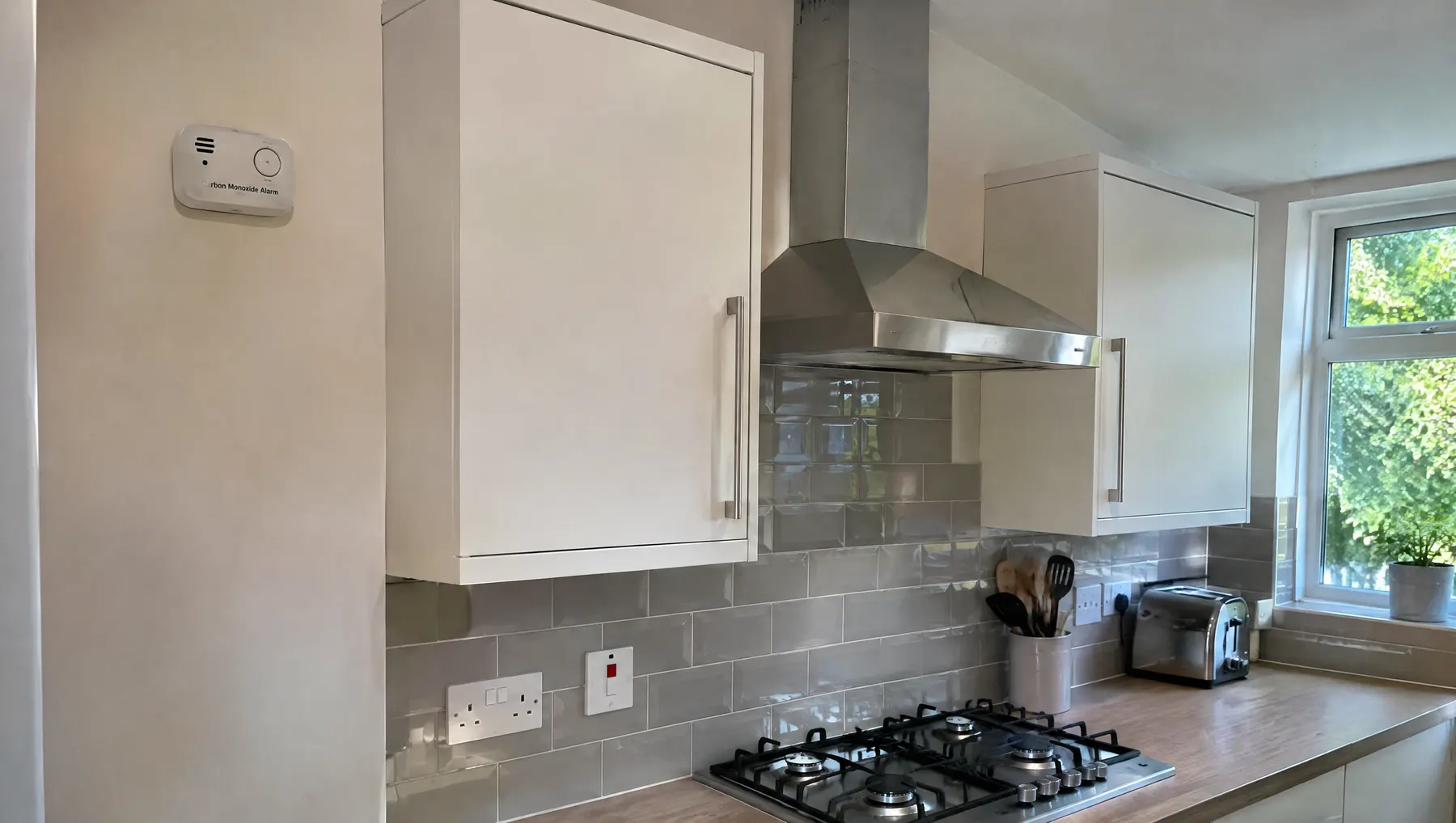
Every home with a gas, oil or solid fuel appliance should have a working carbon monoxide alarm. We fit them: see carbon monoxide alarm fitting. If you smell gas, call 0800 111 999 straight away.
- Landlords need a gas safety check on every appliance they provide every 12 months.
- Give tenants a copy within 28 days of the check, and new tenants before they move in.
- Keep records for at least two years.
- The check can be done up to two months early without losing the original date.
- Rented homes need a carbon monoxide alarm in any room with a fixed combustion appliance (gas cookers excepted).
Landlord gas safety duties at a glance
| Duty | Rule |
|---|---|
| Check frequency | Every 12 months, by a Gas Safe registered engineer |
| Copy to existing tenants | Within 28 days of the check |
| Copy to new tenants | Before they move in |
| Holiday lets and short stays | Covered; display a copy in the property |
| Keep records | At least two years |
| Early checks | Up to two months early, keeping the original date |
What is a gas safety certificate?
A gas safety certificate is the record a Gas Safe registered engineer gives you after checking the gas appliances, fittings and flues in a property. Its proper name is a landlord gas safety record (LGSR), and most people still call it a CP12 certificate. They are the same document.
For landlords it is a legal requirement under the Gas Safety (Installation and Use) Regulations 1998, enforced by the Health and Safety Executive. For homeowners it is optional, but it is the clearest way to know your gas installation is safe.
What the gas safety inspection covers
The gas safety inspection looks at every gas appliance in the property and the pipework that feeds them. Our Gas Safe engineer will typically:
- Check each gas appliance, such as the boiler, a gas fire and the gas hob or cooker, is burning correctly and set to the right gas pressure
- Test that flues and chimneys are carrying fumes safely out of the property
- Run a tightness test on the property's gas supply pipework, from the gas meter onwards, to check for leaks
- Check there is enough ventilation for each appliance
- Test the safety devices that shut an appliance down if something goes wrong
- Record the results and any faults on the gas safety record
Gas safety rules for landlords
Every landlord must have each gas appliance and flue they provide checked every 12 months by a Gas Safe registered engineer, and keep them in a safe condition between checks. Give a copy of the gas safety record to existing tenants within 28 days of the check and to new tenants before they move in, and keep each record for at least two years.
You can have the annual gas safety check done up to two months before the deadline and keep the original expiry date, so the dates do not creep earlier each year. For holiday lets and stays of under 28 days, display a copy of the record in a prominent place instead of handing one to each guest.
Since 1 October 2022, landlords in England must also fit a carbon monoxide alarm in any room used as living accommodation that has a fixed combustion appliance, gas cookers excepted. Our landlord gas safety certificate page covers the detail.
Gas safety checks for homeowners and buyers
Homeowners are not legally required to have an annual gas safety check, but it is a sensible annual check if you have older appliances, a gas fire or a boiler that is not serviced every year. A gas safety check covers every appliance, where a boiler service goes deeper on the boiler alone.
Buying a home? There is no legal need for a seller to provide a gas certificate, but a check before you complete tells you whether the boiler, fire and pipework are safe and what they might cost to put right.
How to get a gas safety certificate
To get a gas safety certificate, book a check with a Gas Safe registered engineer and tell them the number of gas appliances in the property. The gas safety certificate cost depends on that number, and we confirm the price before we book.
On the day, make sure the engineer can reach every appliance and the gas meter. Once the checks are done you get the record to keep and share with tenants. If anything fails, the engineer will explain the fault, make a dangerous appliance safe, and quote for the repair so you can get a valid gas safety certificate.
Always check that the engineer is on the Gas Safe Register. Their ID card lists the gas work they are qualified for, and you can confirm it on the Gas Safe Register website.
What we do
Landlord gas safety certificates (CP12)
Your annual legal check, done properly and on time.
Find out moreGas safety checks for homeowners and buyers
Peace of mind on every gas appliance, for owners and buyers.
Find out moreCarbon monoxide alarm fitting
The right alarm, in the right spot, near the right appliances.
Find out moreGas leak detection and repair
Smell gas? Call 0800 111 999 first. Then call us.
Find out moreFrom first question to signed off
Book the check
Tell us how many gas appliances are in the property.
Engineer visits
Every appliance and the pipework are tested.
Certificate issued
You get the record to keep and share with tenants.
What is included
- Checks on every gas appliance and flue
- Tightness test on the gas pipework
- Ventilation checks
- Landlord gas safety record (CP12)
- Advice and quotes for any faults found
Gas safety FAQs
How often do landlords need a gas safety certificate?
Every 12 months, with a copy given to existing tenants within 28 days of the check and to new tenants before they move in.
What happens if an appliance fails?
The engineer will explain the fault and, if it is dangerous, make it safe. We will quote for the repair so the property can be certified.
Do you cover letting agents with several properties?
What should I do if I smell gas?
Leave the property, do not use switches or flames, and call 0800 111 999. Our guide on what to do if you smell gas has the full steps.
Is a CP12 the same as a gas safety certificate?
Yes. CP12 is the old name that stuck, from the form used before the Gas Safe Register took over. Today the document is called a landlord gas safety record, and any of the three names means the same annual check and record.
Can a gas safety certificate be backdated?
No. The record shows the date the checks were actually done. What the rules do allow is having the check up to two months before the current certificate expires while keeping the original expiry date, so plan the next visit before it runs out.
Do you need a gas safety certificate to sell a house?
No, there is no legal requirement for a homeowner to provide one when selling. Some buyers ask for one, and a recent boiler service record or gas safety check can help a sale go smoothly. Landlords selling a let property still need a valid certificate for as long as tenants live there.
Does a gas safety check include radiators?
No. Radiators are part of the heating system, not gas appliances, so they are outside the check. The engineer looks at the boiler that heats them, along with any other gas appliances, the flues and the pipework.
Read before you decide
How often should a boiler be serviced?
Once a year. Here is why that interval matters, where the law comes in for landlords, and what you should expect the engineer to actually do.
Read the guideWhat to do if you smell gas
If you smell gas, act straight away: call 0800 111 999, get air in, turn the gas off at the meter if it is safe, and avoid anything that could make a spark. The full steps are below.
Read the guideReady to talk about gas safety?
Answer a few questions and we will come back with a free, fixed quote.