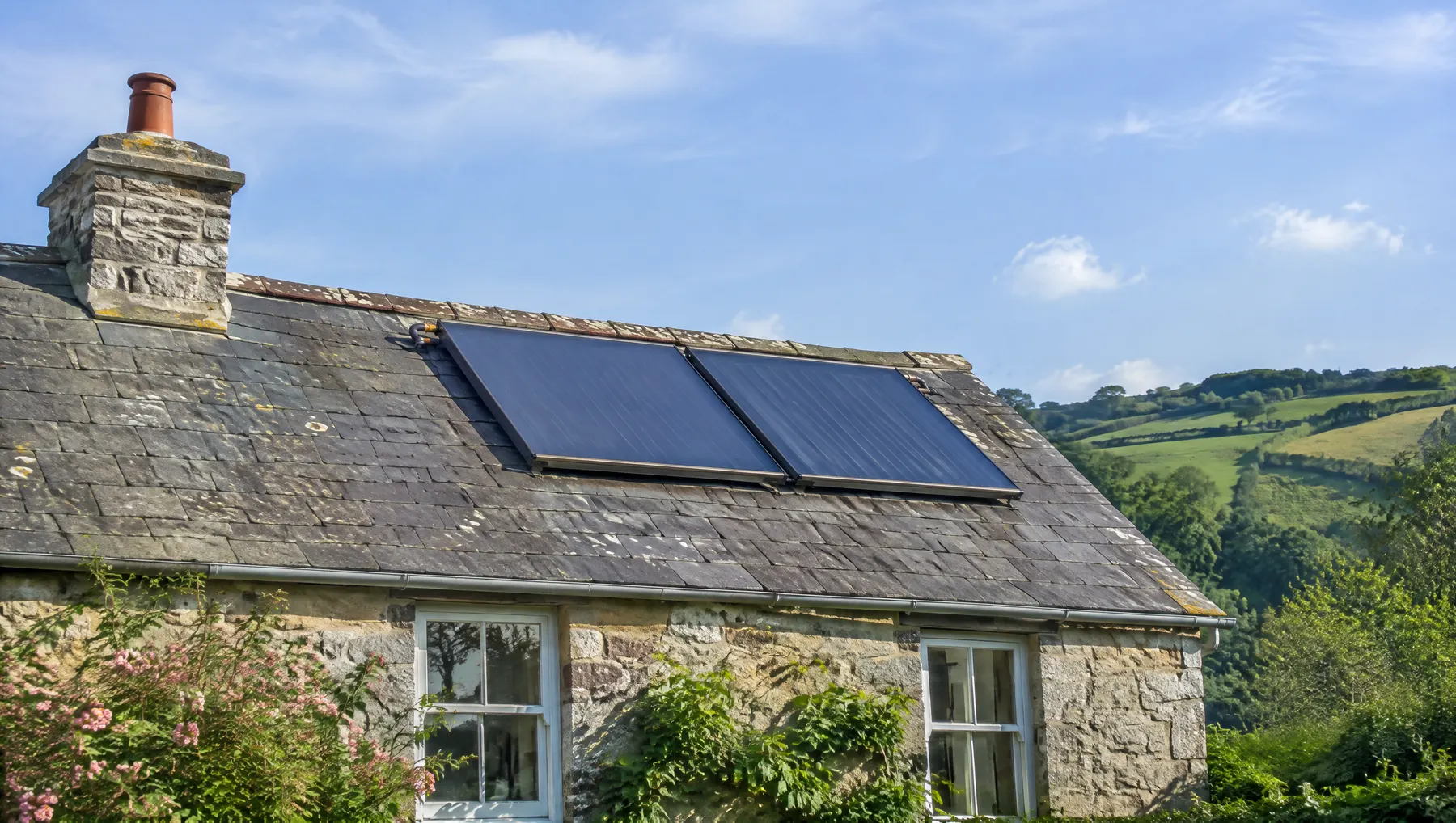
Solar thermal hot water
Free heat from the roof, straight into your cylinder
Solar thermal panels use the sun to heat water, not to make electricity. Fluid runs through collectors on your roof, picks up heat, and passes it to a coil in your hot water cylinder. On a bright day that can cover a lot of your hot water; in winter your boiler or heat pump tops it up. Our MCS certified engineers design and fit complete systems, and we'll tell you honestly whether your roof and hot water use make it worthwhile.
How it works
There are two common collector types: flat plate panels, which look a bit like roof windows, and evacuated tubes, which are rows of glass tubes. Both heat a fluid that's pumped down to a dedicated coil in the cylinder. A controller watches the temperatures and only runs the pump when the panels are hotter than the water.
Your existing boiler or heat pump stays in charge of making sure the water reaches a safe temperature. Solar just does as much of the heating as it can before they kick in.
Who it suits
Solar thermal works best where there's a steady daytime demand for hot water and a decent roof to put it on. Families, B&Bs and holiday lets with lots of showers get more out of it than a single person out at work all day.
A roof facing roughly south is ideal; east or west can work but collects less. Shading from trees or chimneys matters more than you'd think. We check all of that on survey.
- Homes with a hot water cylinder, or room for one
- Higher hot water use, especially in the daytime
- A roof facing south, south-east or south-west with little shade
- Oil, LPG and heat pump homes looking to cut running costs
What about combi boilers?
This is where we'll be blunt. Solar thermal needs somewhere to store the heat it collects, which means a cylinder, usually with a twin coil. If you have a combi, adding solar thermal normally means fitting a cylinder as well, and that changes the cost and the space you need.
Sometimes that's worth doing, especially if you're already thinking about a system boiler or a new hot water cylinder. Sometimes it isn't, and we'll say so.
Costs, VAT and grants
Installing solar panels in a home, including solar thermal collectors, is zero-rated for VAT until 31 March 2027 under HMRC's energy-saving materials rules. That's a straight saving on the whole installation.
Solar thermal isn't covered by the Boiler Upgrade Scheme, which is for heat pumps and biomass. If you're planning a heat pump as well, our Boiler Upgrade Scheme page explains that grant. We give a fixed quote after surveying your roof and cylinder.
What is included
- Roof, orientation and shading survey
- Hot water use assessment and system sizing
- Flat plate or evacuated tube collectors and roof fixings
- Twin-coil cylinder where needed, pump station and controller
- Commissioning and MCS certificate
Solar thermal hot water FAQs
Does solar thermal work in winter?
It still collects some heat on bright winter days, just a lot less than in summer. Your boiler or heat pump does most of the work from late autumn to early spring. The big contribution comes from spring through to early autumn.
Is solar thermal better than solar PV?
They do different jobs. Solar thermal heats water directly; PV makes electricity you can use for anything, including a heat pump. Which is better depends on your roof, your hot water use and your heating system. If PV looks like the better fit for your home, we'll tell you.
Can solar thermal work with a heat pump?
Yes. A twin-coil cylinder can take heat from both. In summer the panels can cover much of your hot water so the heat pump runs less. It's worth designing both together if you're planning them at the same time.
Do I need planning permission?
On most houses, roof-mounted panels don't need it, but listed buildings and homes in conservation areas can be different. We check before quoting so there are no surprises.
How much maintenance does it need?
Not much. The system should be checked periodically, including the fluid, pressure and pump. We can do that alongside your boiler or heat pump service.
Get a fixed price for your home
Tell us about the job and we will arrange a free survey.