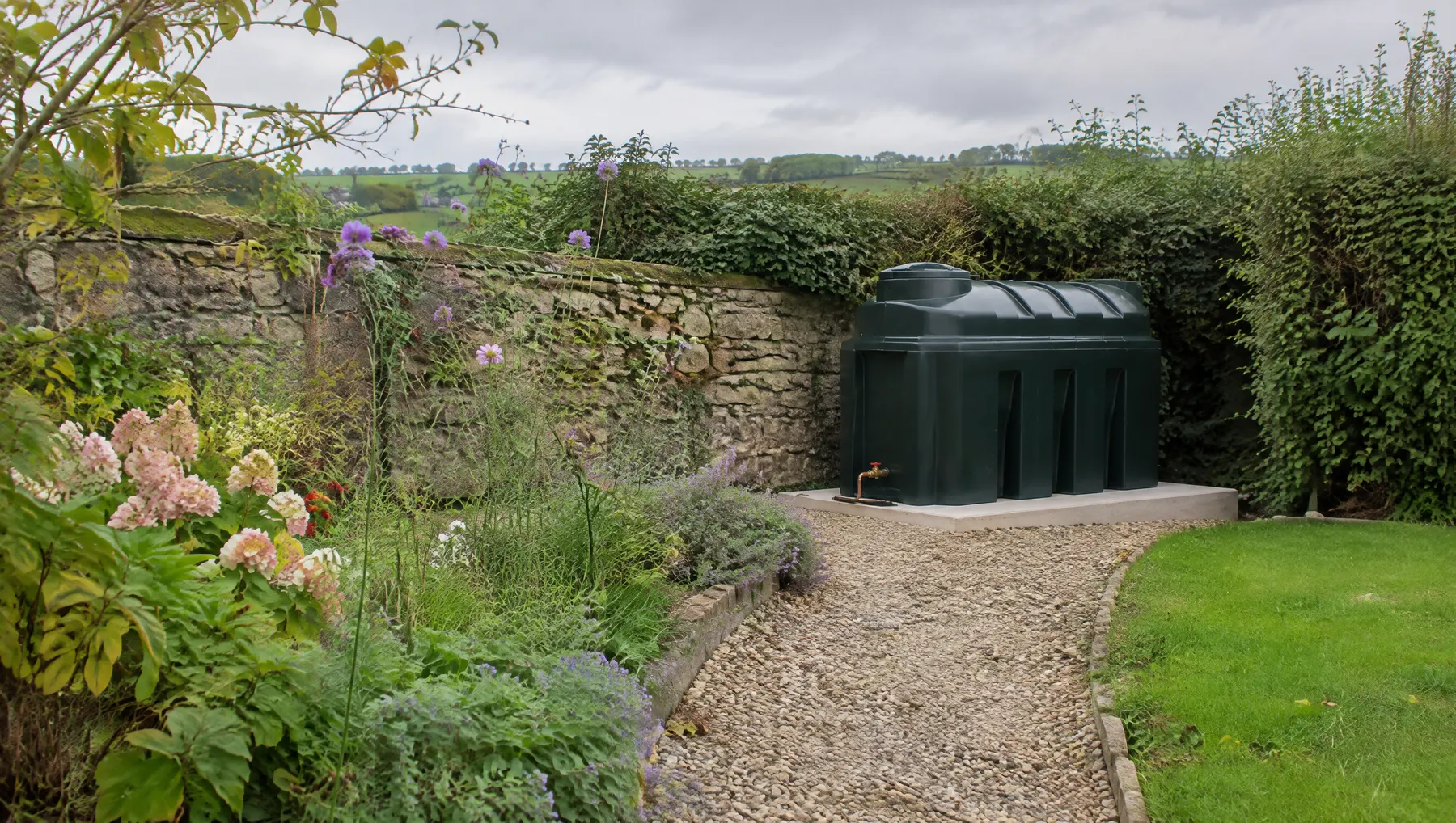
Oil tank installation and replacement
Sited, based and bunded to building regulations
A leaking oil tank is one of the most expensive things that can go wrong at a rural home. Lost fuel is the least of it: oil in the soil, a stream or a neighbour's borehole means clean-up costs and possible insurance headaches. Our OFTEC registered engineers replace old tanks and install new ones to Building Regulations Part J, and we sort out the old tank too.
Signs your tank needs replacing
Plastic tanks don't last forever, and old single-skin ones were never designed with today's rules in mind. Have a look at yours. If you spot any of these, it's time to talk to us:
- Cracks, splits or whitening around seams and fittings
- Bulging or a tank that has changed shape
- Green or black streaks running down the sides
- Rust, weeping or flaking paint on a steel tank
- A cracked or sunken base
- A strong smell of kerosene around the tank
When a tank has to be bunded
A bunded tank is a tank inside a tank: if the inner one leaks, the outer one holds the oil. Approved Document J says a domestic tank of 3,500 litres or less needs this secondary containment wherever there's a significant risk of pollution, and it spells out what that means:
- Total capacity over 2,500 litres
- Within 10m of inland freshwater or coastal waters, including ditches and field drains
- Within 50m of a drinking water source such as a well, borehole or spring
- Where a spill could run into an open drain or loose-fitting manhole cover
- Where spilled oil could reach water by running across hard ground
- Where the tank vent can't be seen from the filling point
- Inside the inner zone (Zone 1) of an Environment Agency groundwater Source Protection Zone
Where the tank can go
Part J also sets fire separation. A tank should be at least 1.8m from any part of the building and at least 760mm from a boundary, unless fire-resisting walls or screens are added. It needs a solid base, such as concrete or paving slabs at least 42mm thick, extending 300mm beyond the tank all round, and a label telling people what to do in a spill.
Planning permission usually isn't needed for a domestic heating oil tank up to 3,500 litres, but there are limits. Permitted development doesn't cover a tank within the grounds of a listed building or in front of the house, and in National Parks, National Landscapes and conservation areas a tank can't go between the side wall of the house and the boundary. We check all of this on survey.
Out with the old
We drain and recover any usable oil where possible, disconnect the old tank, and remove it for disposal. The new supply line gets a fire valve and filter, and we check the boiler end while we're there. As OFTEC registered technicians we can self-certify the work under Building Regulations, so you get a compliance certificate without a separate building control application.
Thinking about moving away from oil altogether? With the Boiler Upgrade Scheme, homes heated by oil can currently get £9,000 towards a heat pump.
What happens, step by step
Survey
We check distances to buildings, boundaries, drains, water and any wells or boreholes, and how the tanker will reach it.
Quote
You get a fixed price covering the tank, base, pipework and removal of the old one.
Prepare
We arrange the base and plan the swap so you're without oil for as short a time as possible.
Install
The new tank goes in, the old one comes out, and the supply is reconnected and tested.
Certify
We self-certify the installation and you receive your compliance certificate.
What is included
- Site survey and pollution risk assessment
- Bunded tank sized for your usage and delivery access
- Compliant base and siting, or fire protection where needed
- New supply line, fire valve and filter
- Drain-down, disconnection and removal of the old tank
- Building Regulations compliance certificate
Oil tank installation and replacement FAQs
Do I have to replace a single-skin tank?
Not automatically, if it's sound and was legal when fitted. But if it's showing wear, or sits near a stream, drain, well or borehole, a bunded replacement is the safer bet. Your home insurer may have a view too.
What size tank do I need?
Enough to take a sensible delivery and see you through winter without running dry. Over 2,500 litres it must be bunded anyway. We'll look at your usage and the access for the tanker before recommending a size.
Can I move the tank to a different spot?
Usually, as long as the new position meets the fire separation and pollution rules and the tanker hose can reach it. A move is often a good chance to get it out of sight and further from the house.
How long does a replacement take?
The swap itself is usually quick once the base is ready. The bigger question is the oil in the old tank, so try not to order a delivery just before we come. We'll give you a timeframe with your quote.
Get a fixed price for your home
Tell us about the job and we will arrange a free survey.