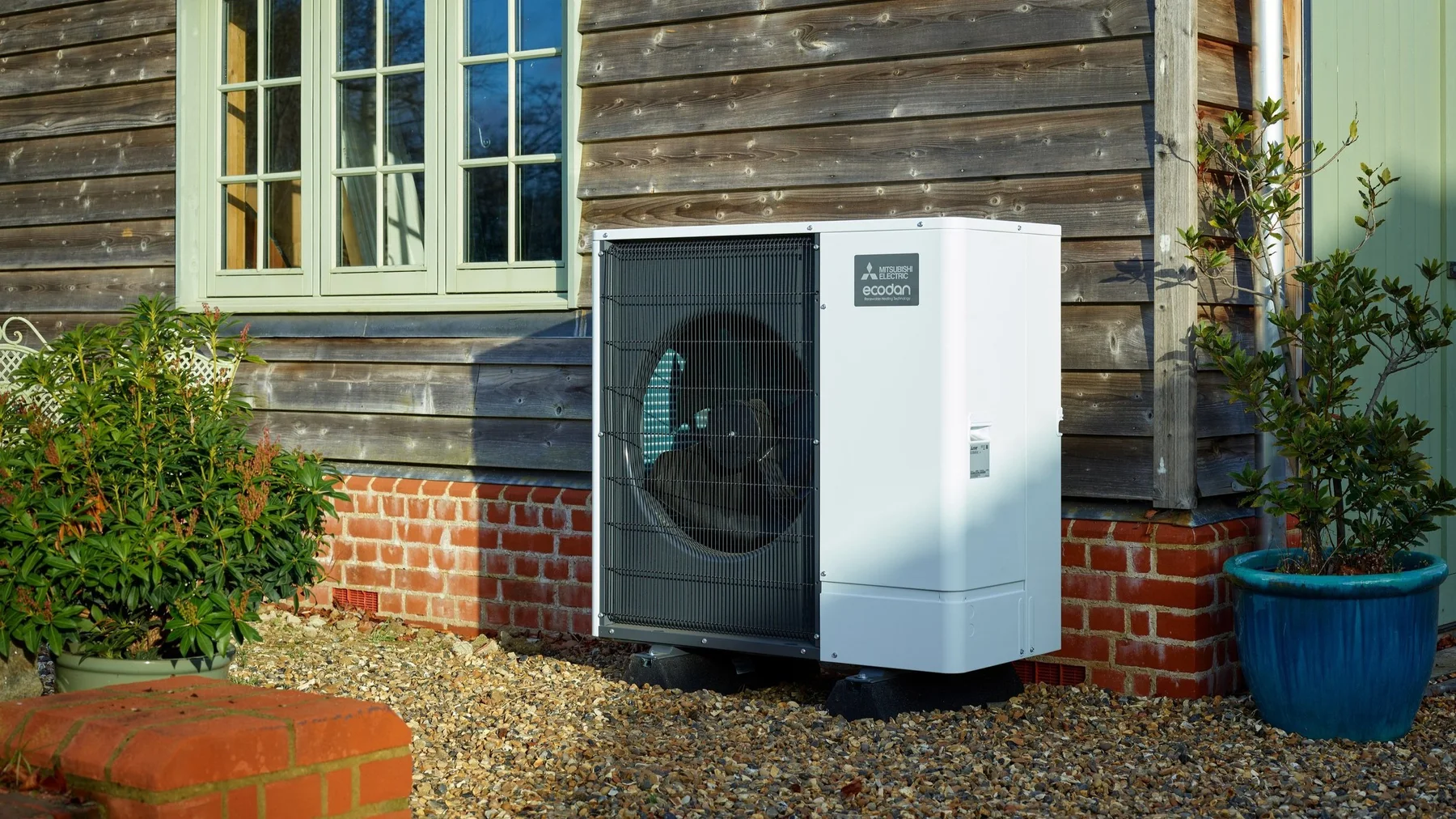
Air source heat pump installation
Surveyed properly, sized for your home, grant sorted
An air source heat pump pulls warmth out of the outside air and uses it for your heating and hot water. Done well, it's a quiet, steady way to heat a home without oil, LPG or gas. Done badly, it's a cold house and a big electricity bill. Our MCS certified engineers survey first, size the system to your actual heat loss, and handle the Boiler Upgrade Scheme application so the grant comes straight off your quote.
It starts with a heat loss survey
Most heat pump problems trace back to guesswork at the start of the installation process. So we measure every room, note the walls, windows, floors and loft insulation, and work out how much heat the house loses on a cold day. That number decides the size of the unit, not the size of your old boiler.
We also check where the outdoor unit can go, whether your radiators can deliver enough heat at lower temperatures, and where a hot water cylinder will fit. You get a written design and a fixed quote agreed before any work starts.
Do you need planning permission?
On most houses in England, no. An air source heat pump counts as permitted development as long as it meets the conditions in Class G of the planning rules. Those were relaxed on 29 May 2025: the old one metre gap from the boundary has gone, the outdoor unit can now be up to 1.5 cubic metres on a house, and a detached house can have two units.
The unit still has to pass the MCS 020(a) noise calculation, which we do as part of the design. Permitted development doesn't cover listed buildings, units on a pitched roof, or, in a conservation area or World Heritage Site, a unit on a wall or roof facing the road. Our guide to heat pump planning permission goes through the detail.
Radiators, cylinders and lower flow temperatures
A heat pump runs cooler than a boiler, usually for longer. That's where its efficiency comes from. Some radiators will be big enough as they are; a few, often in the coldest rooms, may need upsizing. We only change the ones the heat loss figures say need it.
If you have a combi now, you'll need space for a hot water cylinder, usually where an airing cupboard used to be.
The grant comes off your quote
The Boiler Upgrade Scheme currently gives £7,500 towards an air source heat pump in England and Wales. Until March 2027 there's an extra £1,500, making £9,000, if your home is heated by oil or LPG and has no mains gas connection.
Your installer has to be MCS certified to apply, and we do the application for you. The grant is deducted from what you pay, and it shows on the quote. Read more on our Boiler Upgrade Scheme page or see what a heat pump typically costs.
How air source heat pumps work
An air source heat pump works a bit like a fridge in reverse. A fan draws outside air over a coil filled with refrigerant, which picks up heat even when the air feels cold. A compressor raises that heat to a useful temperature, and it passes into the water that runs through your heating system and hot water cylinder.
That makes it an air-to-water heat pump, the type of heat pump the Boiler Upgrade Scheme gives £7,500 towards. Air-to-air units, which blow warm air into rooms, are a different product with a smaller grant.
Heat pumps use electricity to run the compressor and fan, but they move more heat into the house than they use in electricity. That gap is where the energy saving comes from, and it is why good design matters so much.
Finding space for the heat pump unit
The heat pump unit needs outdoor space with free airflow around it, usually against a side or rear wall, or on a flat patch of garden close to the house. It sits on a plinth or wall brackets, as near to the cylinder as practical to keep pipe runs short. We avoid tight corners where air can't circulate and spots right under a neighbour's window.
Inside, the main thing you need is room for the cylinder and a small amount of controls. Insulated pipework runs from the outdoor unit through the wall and into your existing radiators or underfloor heating.
Is a heat pump right for your home?
A heat pump could suit your home if it has reasonable insulation, room outside for the unit and space indoors for a cylinder. Energy efficiency matters more than age. A well-insulated older house can run better on a heat pump than a draughty newer one.
Underfloor heating pairs well because it warms a large surface at low temperatures, but plenty of homes run happily on radiators alone. If you're thinking about getting a heat pump to replace a gas boiler, oil or LPG, the survey tells you honestly whether it makes sense now or after some insulation work.
Heat pump installation cost and running costs
Installation costs depend on the size of the unit, the cylinder, how many radiators need changing and how much pipework is involved. The grant takes £7,500 off an air source heat pump in England and Wales, and we show that on the quote.
Running costs and energy bills come down to design and tariff. An air source heat pump system sized to your home's real heat loss, and run at low flow temperatures, uses less electricity to heat your home than one that's oversized and run hot.
What happens, step by step
Survey
We visit, measure up and look at where the outdoor unit and cylinder can go.
Design and fixed quote
You get the heat loss figures, the system we recommend and a fixed price with the grant already deducted.
Grant application
We apply to Ofgem on your behalf. Ofgem may contact you to confirm we're acting for you.
Installation
Most of the work is the outdoor unit, the cylinder and the pipework. We keep you warm and leave things tidy.
Handover
We commission the system, set the controls with you and register the installation with MCS.
What is included
- Room-by-room heat loss calculation and written system design
- MCS 020(a) noise check and outdoor unit siting
- Supply and fitting of the heat pump, controls and hot water cylinder
- Radiator upgrades where the design calls for them
- Boiler Upgrade Scheme application handled for you
- Commissioning, MCS certificate and a walk-through of the controls
Air source heat pumps FAQs
Will an air source heat pump work in an older house?
Often, yes. Plenty of older homes run well on heat pumps once the heat loss is properly worked out and a few radiators are upsized. A draughty house with no loft insulation is a different story, and we'd tell you to sort that first. The survey is where we find out which camp you're in.
How noisy is the outdoor unit?
Quieter than most people expect: a low hum from the fan when it's working hard. To count as permitted development it has to pass the MCS 020(a) sound calculation, which looks at the nearest neighbouring window. We do that calculation before we pick the spot.
Can I keep my old boiler as a backup?
Not if you want the grant. The Boiler Upgrade Scheme is for replacing fossil fuel heating, and gov.uk is clear that hybrid systems aren't eligible. If a heat pump and boiler combination suits your home better, have a look at our hybrid heat pump page.
Do I need to be on a special electricity tariff?
You don't have to be, but it's worth looking at. Some suppliers offer tariffs aimed at heat pump owners, and the right one can make a real difference to running costs. We set the controls up so the system makes the most of whichever tariff you choose.
Can I install a heat pump myself?
We wouldn't advise it. Installing an air source heat pump means electrical work, a heat loss design and usually an unvented hot water cylinder, which must be fitted by someone qualified to do it. And to get the Boiler Upgrade Scheme grant, your heat pump installer has to be MCS certified.
Which is cheaper to run, air source or ground source?
A ground source heat pump usually runs a little more efficiently, because the ground holds a steadier temperature than the air through winter. It also costs more to install, since it needs trenches or a borehole. For most homes without much land, air source is the practical choice. Our ground source heat pump page explains when it makes sense.
Why is my electric bill so high with a heat pump?
Some rise is expected, because electricity is now doing the job gas or oil used to do, so compare your total heating bill rather than electricity alone. If it still looks high, common causes are flow temperatures set too high, a unit sized wrongly for the house, or controls that fight the heat pump's steady way of working. We check all of that at handover.
Get a fixed price for your home
Tell us about the job and we will arrange a free survey.