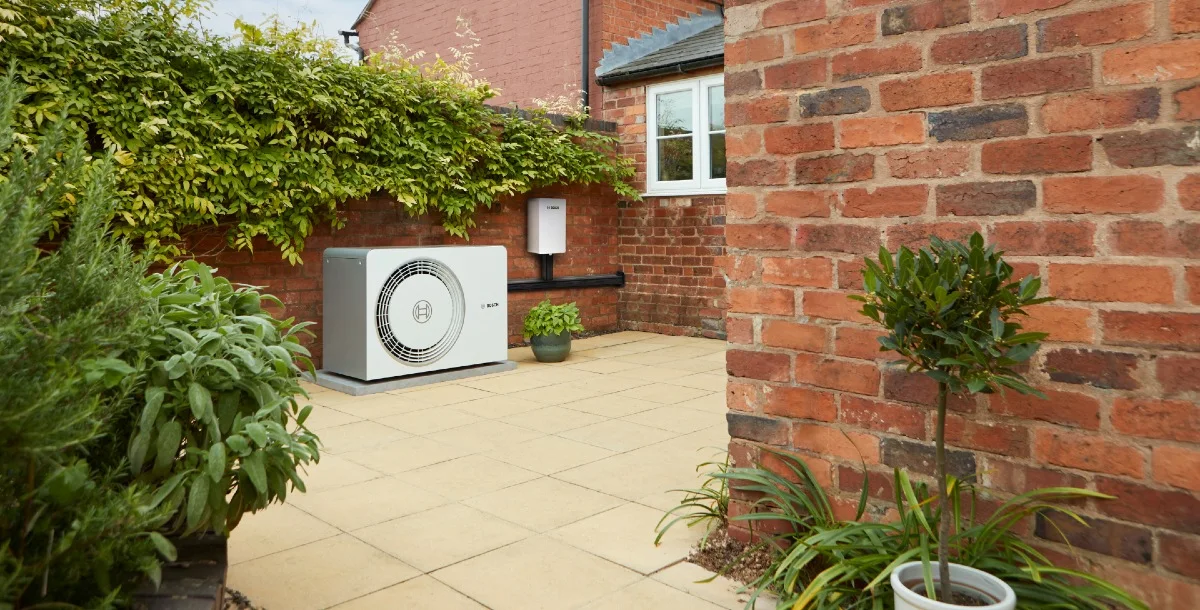
Heat pump installation across the South West
Designed room by room, so it heats the house properly.
A heat pump only works well when it is designed around your home. Our MCS certified installers calculate the heat loss of every room, size the pump and radiators to match, and help you claim the Boiler Upgrade Scheme grant.
Is a heat pump right for your home?
Heat pumps run at lower temperatures than boilers, so insulation, radiator sizes and hot water storage all matter. Plenty of older South West homes suit one with a few upgrades. Some suit a hybrid system better.
Off the gas grid, the case is often strongest. Replacing an oil or LPG boiler with an air source heat pump removes fuel deliveries and the tank altogether.
Because our installers are MCS certified, you can apply for the Boiler Upgrade Scheme grant. See air source heat pump cost for what drives the price.
- The Boiler Upgrade Scheme gives £7,500 towards an air source or ground source heat pump in England and Wales.
- Homes heated by oil or LPG with no mains gas get an extra £1,500 until March 2027.
- Hybrid systems (heat pump plus boiler) are not eligible for the grant.
- Your installer must be MCS certified; they apply for the grant and take it off your bill.
- The typical air source installation under the scheme cost £12,826 before the grant (July to September 2026).
Air source, ground source or hybrid?
| Air source | Ground source | Hybrid | |
|---|---|---|---|
| How it works | Takes heat from outdoor air | Takes heat from pipes buried in the ground | Heat pump plus a boiler for the coldest days |
| Space needed | Outdoor unit on a solid base | Garden for trenches or a borehole | Outdoor unit and your boiler |
| Typical cost before grant | £12,826 median | £26,500 median | Ask for a quote |
| Grant | £7,500 (+£1,500 off-gas) | £7,500 (+£1,500 off-gas) | Not eligible |
| Read more | Air source | Ground source | Hybrid systems |
How a heat pump works
A heat pump moves heat rather than making it by burning fuel. An air source heat pump uses a refrigerant to absorb heat from the outside air, even on a cold day. A compressor raises the temperature, and that heat passes into the water in your central heating and hot water cylinder.
Because most of the energy comes from the air or the ground, heat pumps use much less electricity than the heat they deliver. That is what makes them such an energy-efficient way to heat your home, as long as the system is designed around your heat loss.
They work best at lower flow temperatures than a gas boiler, running for longer at a gentler heat. Radiators feel warm rather than hot, and the house stays at an even temperature.
Types of heat pumps
We install three types of heat pump. The right one depends on your garden, your budget and how much heat the house needs.
- Air source (air-to-water): an outdoor heat pump unit on a solid base, connected to your radiators and a hot water cylinder indoors. The most common choice, and eligible for the grant.
- Ground source: pipes buried in trenches or a borehole collect heat from the ground, which stays at a steadier temperature through the year. More efficient, but the groundworks push the upfront cost up. See ground source heat pumps.
- Hybrid: a heat pump working alongside a gas boiler that tops up on the coldest days. Useful where a full switch is not practical yet, but hybrids are not eligible for the Boiler Upgrade Scheme.
The heat pump installation process
Understanding the installation process helps you plan around it. These are the stages we follow on every job.
- Survey and heat loss: we measure every room, check insulation, windows and existing radiators, and look at where the outdoor unit can go
- Design: we size the heat pump, radiators and cylinder, and run the MCS 020(a) noise calculation needed for permitted development
- Grant application: we apply for the Boiler Upgrade Scheme; the heat pump has to be installed and commissioned within 120 days of the application
- Installation: the outdoor unit, hot water cylinder, controls and any radiator upgrades go in, and the old boiler comes out
- Commissioning and handover: we set the system up, issue the MCS certificate and show you how to run it efficiently
Heat pump installation cost and grants
The UK government's Boiler Upgrade Scheme statistics put the median air source installation at £12,826 for July to September 2026, before the grant, with the middle half of jobs between £10,717 and £15,461. Ground source had a median of £26,500 in 2025/26.
The grant takes £7,500 off either, or £9,000 until March 2027 if your home is heated by oil or LPG and has no mains gas. Installing a heat pump in a home is also zero-rated for VAT until 31 March 2027, under HMRC's energy-saving materials rules.
What moves your heat pump installation cost is mostly property size and heat loss, how many radiators need upsizing, whether you need a new cylinder (normally yes if you have a combi now) and how much pipework changes. Our air source heat pump cost page breaks it down. Those are official median figures, not our prices; you get a fixed quote after the survey.
Getting your home ready to make the switch
Good insulation makes a heat pump smaller, cheaper to buy and cheaper to run. You do not need a perfect house, but sorting obvious draughts and loft insulation first is money well spent.
Running costs and energy bills depend on your insulation, the design and your electricity tariff, so we will not promise a saving without seeing the house. Moving from a gas boiler is a different sum from moving off oil or LPG, and we will walk you through both honestly.
Planning rules for air source units were relaxed on 29 May 2025: the old one metre gap from the boundary has gone and a detached house can have two units. Listed buildings and some conservation areas still need more care, so read our planning permission guide before you commit.
What we do
Air source heat pumps
Surveyed properly, sized for your home, grant sorted
Find out moreAir source heat pump cost
Real installation costs from government data, and how we quote
Find out moreGround source heat pumps
For homes with land, big heat demand and a long view
Find out moreHybrid heat pump systems
A heat pump for most days, a boiler for the coldest ones
Find out moreHeat pump servicing and repairs
Annual checks that keep efficiency up and bills down
Find out moreBoiler Upgrade Scheme grant
Up to £9,000 off a heat pump, applied for by us
Find out moreSolar thermal hot water
Free heat from the roof, straight into your cylinder
Find out moreFrom first question to signed off
Tell us about your home
Start with the quote tool.
Survey and design
We measure every room and design the system to your heat loss.
Grant and quote
You get a fixed quote and we help with the grant paperwork.
Install and handover
We fit, commission and show you how to run it efficiently.
What is included
- Room-by-room heat loss calculation
- System design and sizing
- Outdoor unit, cylinder and controls fitted
- Radiator upgrades where needed
- Commissioning and MCS certificate
- Boiler Upgrade Scheme application support
Air source heat pump installation by county
Cornwall
Designed for granite walls, sea air and off-grid homes
Find out moreDevon
From cob farmhouses to modern estates, sized properly
Find out moreSomerset
Planned around Levels flooding, hill farms and stone villages
Find out moreDorset
Thatch, Purbeck stone and planning rules handled properly
Find out moreHeat pump installation FAQs
Do heat pumps work in old houses?
Many do, but the design has to account for solid walls, draughts and radiator sizes. We tell you honestly after the survey whether a heat pump, a hybrid or a new boiler suits your home best.
Do I need planning permission?
Most air source heat pumps in England are permitted development, with conditions. Listed buildings and some conservation areas need more care. Read our heat pump planning permission guide.
How much is the Boiler Upgrade Scheme grant?
The grant is set by the government and paid to the installer, who takes it off your bill. See our Boiler Upgrade Scheme page for current amounts and eligibility.
Do heat pumps need servicing?
Yes, a yearly check keeps them efficient and protects the warranty. See heat pump servicing.
Can I install a heat pump myself?
We would not advise it, and you would lose the grant. The Boiler Upgrade Scheme only pays when an MCS certified installer designs, fits and commissions the system. A DIY installation also skips the heat loss design and noise calculation, and can put the manufacturer warranty at risk. Use a qualified heat pump installer.
Which is cheaper to run, air source or ground source?
Ground source usually runs a little more efficiently, because the ground stays at a steadier temperature than the outside air. It costs far more to put in, though: the government's figures show a median of £26,500 against about £12,800 for air source. For most homes, air source is the practical choice.
Are heat pump installations VAT free?
For now, yes. Installing a heat pump in a home is zero-rated for VAT until 31 March 2027 under HMRC's energy-saving materials rules. After that, HMRC says the rate goes to 5%.
Why is my electric bill so high with a heat pump?
Your electricity use goes up because the heat pump now does the job the gas or oil used to, while that fuel bill disappears. If the total still feels high, common causes are a flow temperature set too high, settings that fight the system, or a backup immersion heater coming on more than it should. A service will usually spot it.
Read before you decide
Do you need planning permission for a heat pump?
Usually not, but the conditions matter, and listed buildings and conservation areas change the picture. Here are the current rules for England, checked against the Planning Portal.
Read the guideHeating a listed or period home: Bath stone, cob and granite
Old buildings can be warm and comfortable, but the heating has to work with the walls, not against them, and the paperwork has to be right. Here is what owners in the South West need to know.
Read the guideOil boiler vs heat pump: which is right for an off-grid South West home?
If your oil boiler is near the end, you have a real choice for the first time. Here is an honest comparison for rural homes, from granite cottages to farmhouses.
Read the guideReady to talk about heat pumps?
Answer a few questions and we will come back with a free, fixed quote.