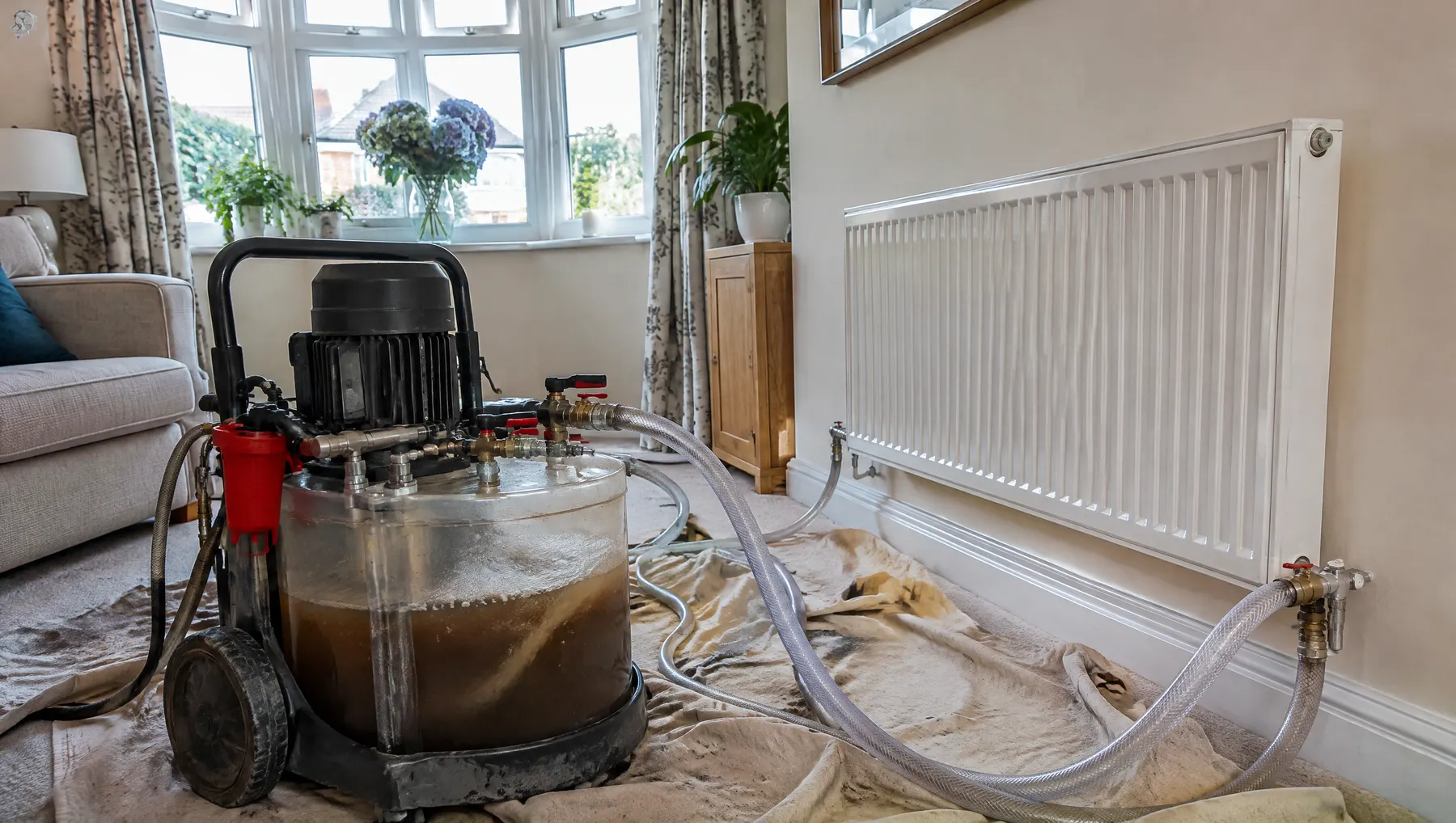
Power flushing
Clears the sludge so your radiators and boiler can work properly.
Over the years, the water in your heating system picks up rust and debris that settles as black sludge. It blocks radiators, strains the pump and can shorten the life of your boiler. A power flush pushes water and cleaning chemicals through the whole system at high flow to shift it. We check whether you actually need one first, then quote a fixed price.
Signs your system needs a power flush
Not every system needs a full flush. These are the signs that point to one:
- Radiators cold at the bottom and warm at the top
- Black or brown water when you bleed a radiator
- Radiators that take a long time to warm up
- A noisy boiler that bangs or kettles
- Frequent pump or heat exchanger failures
- A new boiler going onto an old, dirty system
What happens during a power flush
We connect a flushing pump to the system, usually in place of the circulating pump, and add a cleaning chemical. Then we work through the radiators one at a time, isolating each to focus the flow and loosen deposits.
Once the water runs clear, we refill with clean water and add an inhibitor to slow future corrosion. Fitting a magnetic filter afterwards keeps catching debris so the system stays cleaner for longer.
Power flush or chemical clean?
A power flush is the heavy-duty option. On a system that is only mildly dirty, a chemical clean (adding cleaner, running the system, then draining and refilling) plus a filter is often enough and costs less.
We will tell you which one your system needs. We would rather not sell you a power flush you do not need, and on very old systems with weak pipework, aggressive flushing can expose leaks. If that is a risk, we say so before we start.
Typical costs
Which? puts a power flush on a five-radiator system at £300 to £750, with an average of £500. Bigger systems with more radiators take longer.
We give you a fixed price after we have seen the system. If you are getting a new boiler, we can include the clean in that quote so it is done in one visit.
What is included
- Check of the system water and radiators to confirm a flush is needed
- Power flush with cleaning chemical, radiator by radiator
- Clean water refill and corrosion inhibitor
- Radiators bled and the system balanced
- Optional magnetic filter fitted on the return pipe
Power flushing FAQs
How long does a power flush take?
Most homes take a full day. Bigger systems with lots of radiators, or very heavy sludge, can run into a second day.
How much does a power flush cost?
Which? gives £300 to £750 for a five-radiator system, averaging £500. The number of radiators and how blocked the system is change the time needed. We give a fixed price after a look.
Will a power flush fix my cold radiators?
If sludge is the cause, usually yes. Cold spots can also come from a faulty valve, air in the system or poor balancing, so we check those before recommending a flush.
Do I need a power flush with a new boiler?
The system needs to be clean for the boiler warranty, but that does not always mean a full power flush. On a reasonably clean system, a chemical clean and a magnetic filter can do the job.
Can a power flush cause leaks?
It does not create leaks, but it can reveal weak spots that sludge was sealing. On older systems we check the condition first and warn you if we think that is likely.
Get a fixed price for your home
Tell us about the job and we will arrange a free survey.