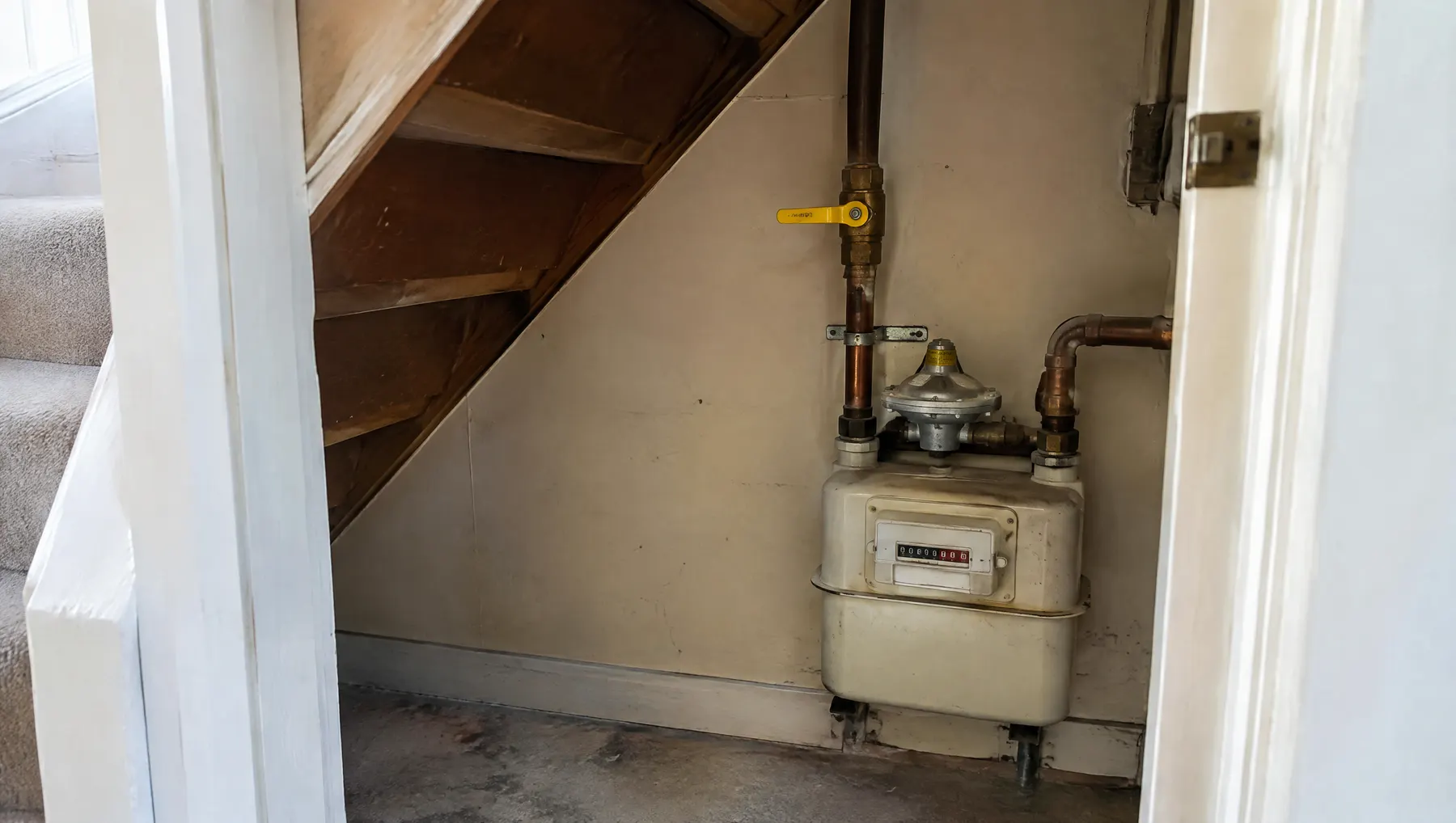
If you smell gas, call the National Gas Emergency Service on 0800 111 999, open doors and windows, and turn off the gas at the meter unless it is in a cellar or basement. Do not turn lights or electrical switches on or off, do not smoke or use naked flames, and leave the building if the smell is strong.
Mains gas has no smell of its own. Suppliers add a strong odorant, the familiar rotten-egg or sulphur smell, so that leaks get noticed. If you catch it, take it seriously, even if it is faint.
What to do, step by step
This follows the advice published by Cornwall Fire and Rescue Service and the Health and Safety Executive.
- Call 0800 111 999. Use a phone outside the property if you can. The emergency service will ask for your address, where the smell is strongest and whether anyone is affected, and send an engineer.
- Open doors and windows to let fresh air in.
- Turn off the gas at the meter, using the lever on the pipe next to it, unless the meter is in a cellar or basement. Do not go down into a cellar or basement if you smell gas there. Leave the building instead.
- Turn off gas appliances such as the hob, fire or boiler, if it is safe to reach them.
- Get everyone out if the smell is strong, and keep people away from the area if you are asked to evacuate.
- Wait for the engineer. Do not use the gas appliances again until they have been checked and you are told they are safe.
What not to do
- Do not turn lights on or off, or use any electrical switches, doorbells or plugs. A switch can make a tiny spark.
- Do not smoke, strike matches or use a lighter. Put out any naked flames.
- Do not go into a cellar or basement that smells of gas.
- Do not try to find or fix the leak yourself.
- Do not go back in, or turn the gas back on, until the emergency engineer says it is safe.
If the gas meter is in an outdoor box and you cannot open it, or you cannot find the meter, do not worry about it. Get out, get air in and make the call.
Who is responsible for what
The emergency service deals with the immediate danger. In the South West, the gas network is run by Wales and West Utilities, and their engineer will make the supply safe. That can mean capping off an appliance or turning off your supply.
Their job stops at making it safe. If the leak is on your side of the meter, on your pipework or an appliance, you then need a Gas Safe registered engineer to find and repair it before the gas can be turned back on. Our gas leak repair page explains what that involves. If the boiler was the culprit, see emergency boiler repair.
Carbon monoxide: the danger you cannot smell
Gas leaks smell. Carbon monoxide does not. It is produced when gas, oil, LPG, coal or wood does not burn properly, usually because an appliance is faulty or a flue is blocked or damaged. It is invisible, has no taste or smell, and can kill.
Symptoms of carbon monoxide poisoning
The NHS lists these symptoms. They are easy to mistake for flu or food poisoning, and a clue is that they ease when you leave the house and come back when you return.
| Common symptoms (NHS) | Signs that need 999 or A&E |
|---|---|
| Headache | Trouble breathing |
| Dizziness | Sudden confusion |
| Feeling or being sick | Loss of consciousness |
| Feeling weak, tired or confused | Weakness |
| Chest and muscle pain, shortness of breath | Chest or muscle pain |
If you suspect carbon monoxide, the NHS advises turning off the appliance if you can, going outside, and getting medical advice as soon as possible. Call NHS 111 if you have symptoms. Call 999 or go to A&E for the serious signs above, but do not drive yourself. Then call 0800 111 999 so the appliance can be made safe.
Warning signs on your appliances
The HSE lists signs that an appliance may not be burning safely:
- Yellow or orange flames where they should be blue (fuel-effect fires are the exception).
- Soot or yellow-brown staining on or around the appliance.
- A pilot light that keeps going out.
- More condensation than usual on the inside of windows.
If you use LPG or bottled gas
Plenty of rural homes and holiday lets in Cornwall, Devon and Somerset run on LPG. The same no-sparks, fresh-air rules apply. Turn off the supply at the tank or bottle if it is safe to do so, and call the emergency number for your LPG supplier, which is usually on the tank, the bottle or your bill.
LPG is heavier than air, so a leak tends to collect at low level, in cellars, drains and dips in the floor, rather than drifting up and out. Keep people away from low spaces and do not assume a leak has cleared because you cannot smell it at head height.
Preventing it happening again
- Have gas appliances serviced every year by a Gas Safe registered engineer. The HSE says gas appliances should be serviced and maintained by a competent person.
- Fit an audible carbon monoxide alarm in every room with a fuel-burning appliance, and test it regularly. We offer carbon monoxide alarm fitting.
- Never block air vents or flues, and do not use outdoor appliances like barbecues or patio heaters indoors.
- If you are buying a house or have not had the gas checked in a while, book a gas safety check.
- Landlords must have an annual gas safety check on every gas appliance and flue they provide.
Frequently asked questions
What number do I call if I smell gas?
0800 111 999, the National Gas Emergency Service. It is open 24 hours a day. If you use LPG, call your LPG supplier's emergency number instead, which is usually printed on the tank, bottle or bill. If anyone is hurt or there is a fire, dial 999.
Should I open windows if I smell gas?
Yes. Open doors and windows to get fresh air in and help the gas disperse. Then turn off the gas at the meter, unless it is in a cellar or basement, and make the call from outside.
Can I use my mobile phone if I smell gas?
Make the call from outside, away from where the smell is strongest. Do not use electrical switches, doorbells or plugs inside, because they can spark.
Who pays for a gas leak repair?
The emergency service's job is to make the situation safe, not to carry out repairs. If the fault is on your pipework or one of your appliances, you need a Gas Safe engineer to repair it, and that work is down to the property owner. Landlords are responsible in rented homes.
Can a boiler leak carbon monoxide without smelling of gas?
Yes, and that is what makes it so dangerous. Carbon monoxide has no smell. A faulty boiler can produce it while there is no gas smell at all, which is why an annual service and a working CO alarm matter so much.